
Three members of the Company were lucky enough to experience a close-up view of the Anointing Screen, so they could fully appreciate the incredible detail of both its design and execution.

They were invited to an evening reception at the Drapers’ Hall on 30 October, where the magnificent three-sided, embroidered screen, created for the coronation of His Majesty King Charles III, was on display.
The screen was gifted for the coronation by the City of London Corporation and 88 City Livery Companies, one of which was The Worshipful Company of Cooks.

Guests were allowed to closely inspect the screen and were given an overview of the design and production process, which combined traditional and contemporary sustainable embroidery practices. The wooden pole framework was made from a windblown oak tree from the Windsor Estate, which was originally planted by The Duke of Northumberland in 1765.

The design of the screen – a Commonwealth Tree – celebrated all 56 member countries of the Commonwealth, reflecting His Majesty’s deep affection for them. It was selected personally by The King and was inspired by the stained-glass Sanctuary Window in the Chapel Royal at St James’s Palace, which was gifted by the Livery Companies to mark the Golden Jubilee of Queen Elizabeth II in 2002.
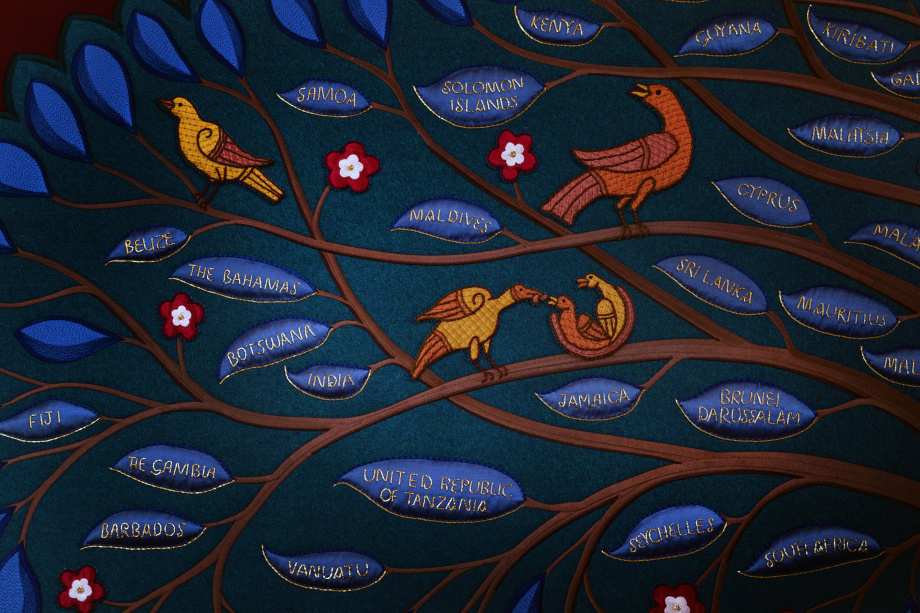
The screen’s purpose was to create privacy in Westminster Abbey for the most sacred part of the coronation preparations, when the Dean of Westminster pours holy oil from the Ampulla into the Coronation Spoon, and the Archbishop of Canterbury anoints the Sovereign on the hands, chest and head. The Anointing is historically considered as a sacred moment between the Sovereign and God.

Designed by iconographer Aidan Hart, the screen was brought to life through both hand and digital embroidery, managed by the Royal School of Needlework. Contributions to its production were also made by members of the Worshipful Company of Broderers, Carpenters, Drapers, and Weavers.
30 October 2023


